Football trips to Atlético Madrid 2026/27
Atlético Madrid have spent decades being the city's second club on paper, and then repeatedly proving on the pitch that the gap was a fiction. This is a club that has won La Liga titles, reached Champions League finals, and built a supporter culture that fills a stadium with noise from the opening whistle. Madrid itself adds another layer to the trip: world-class food, a thriving bar scene, art museums, and a city that stays up late and does it well. A football trip to Atlético Madrid combines all of that, and this page helps you find the right football package to make it happen, whether you want everything arranged in one booking or just the match ticket.
Compare football trips to Atlético Madrid
Football packages to Atlético Madrid come in different shapes depending on what you need. A full package typically bundles flights, hotel accommodation, and a match ticket into a single booking with one seller, which suits most travellers flying in from outside Spain. Some packages also include airport transfers or pre-match experiences in the city. If you are already based in Spain or have your travel sorted independently, a standalone match ticket is usually the simpler route. Either way, it pays to read what each seller actually includes before deciding, because the headline description does not always tell the full story. Inclusions, hotel categories, and ticket types can all vary significantly between sellers.
Atlético Madrid tickets
Buying tickets for Atlético Madrid matches directly through the club is difficult for visiting fans, as most seats are allocated to the club's membership base before any general sale opens. The specialist companies listed on this page offer match tickets across different categories, either as part of a full football package or as a standalone purchase. Some sellers also offer hospitality and premium options, which can include lounge access and upgraded seating, so it is worth checking individual seller pages if that is what you are after. Ticket delivery varies by seller, with mobile, print-at-home, and other formats all possible, so confirm how yours arrives before the trip. For fixtures such as the Derby Madrileño and European home legs, booking early is wise.
Supporter guide to Atlético Madrid and Wanda Metropolitano
Atlético supporters are vocal throughout a match, not just at key moments. The south section of the home end drives the singing, and the atmosphere builds steadily rather than arriving in isolated bursts. For a first-time visitor, the collective intensity can be striking, especially for bigger home fixtures. Pre-match, fans gather in the bars around the ground and in the city centre well before kick-off, and the atmosphere away from the stadium is part of the experience. Arrive at the ground at least an hour before the start, as security checks are thorough and queues grow in the final half-hour. Large bags are generally not allowed inside, and checks are routine.
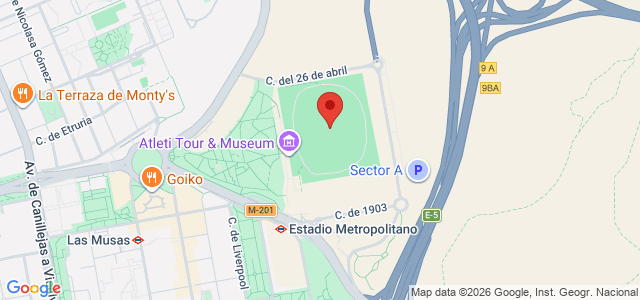
Getting to Wanda Metropolitano
The metro is the most practical way to reach the ground. Line 7 stops at Estadio Metropolitano, directly next to the stadium, and the journey from central Madrid takes around 20 to 25 minutes. Trains run frequently on matchdays. Driving is possible but traffic around the ground before and after a match makes it considerably less convenient. Platforms get busy after the final whistle, so allow some time before heading down. From most central neighbourhoods, the ground is an easy, straightforward journey.