Football trips to Roma 2026/27
Roma supporters turn match day into something the whole city feels. In the hours before kick-off, bars fill up, colours appear in the streets, and the noise builds long before anyone sets foot inside the ground. The Curva Sud is where the most vocal Roma fans gather, generating the kind of continuous support that makes a first visit genuinely surprising in its intensity. Chants start early and rarely stop. For a derby against Lazio or a European knockout night, that atmosphere shifts into something harder to describe and worth travelling a significant distance to experience. This page brings together football packages for Roma and standalone match tickets so you can see what is available in one place.
Compare football trips to Roma
Football packages to Roma typically combine flights, a hotel stay and a match ticket into one booking, which suits travellers who want the logistics handled together rather than pieced together across multiple sites. Most are built around two or three nights in Rome, giving you time to take in the city before or after the match. The quality and location of the hotel, whether transfers are included, and what extras come with the deal all vary between operators, so looking at the specifics matters more than the headline. If your flights and accommodation are already arranged, a standalone match ticket is the simpler route. Football packages for Roma and ticket-only options are both available here, side by side.
Roma tickets
Tickets for Roma home matches at Stadio Olimpico are available through the operators listed on this page, either as part of a wider football package or as a standalone match ticket. Buying directly through Roma requires a Fidelity Card, the club's membership scheme, and availability is not guaranteed even with one. Using a listed operator removes that barrier: your seat is confirmed at the point of booking, and you know in advance how your ticket will be delivered and what happens if plans change. Seats closer to the pitch carry a premium over the upper tiers. For the Derby della Capitale against Lazio and home European knockout ties, it is wise to plan and book earlier than you would for a routine Serie A fixture.
Supporter guide to Roma and Stadio Olimpico
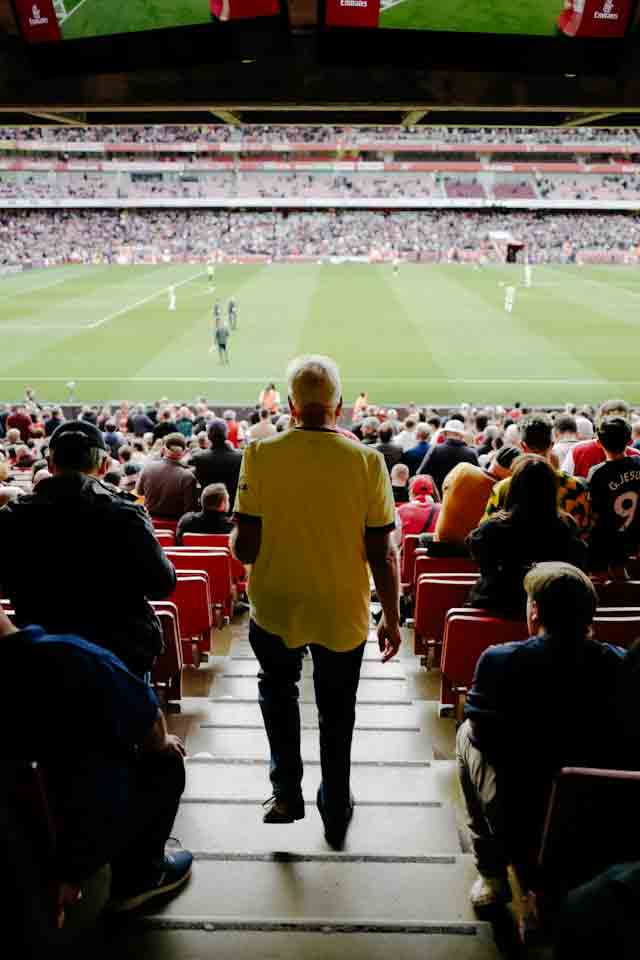
Roma and Lazio share their ground but represent fiercely separate identities within the city. That division shapes how match days feel: attending a Roma home game means stepping into a culture where the club is genuinely central to how a large part of the city sees itself. Flags and banners are standard, and coordinated displays in the stands are common for big fixtures. The bars around the stadium fill up well before kick-off, and the atmosphere among the crowd arriving on foot has a distinct energy compared to a regular European football experience. First-time visitors often remark that the commitment of the home support is visible from the very first minute.
Getting to Stadio Olimpico
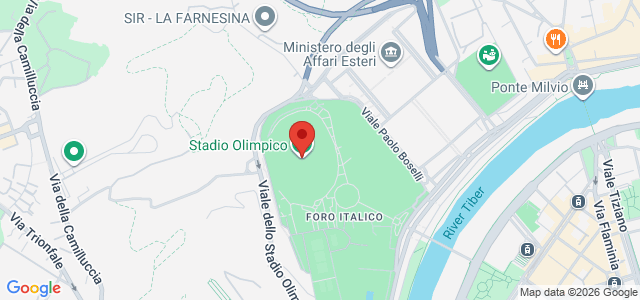
Stadio Olimpico sits in the northern part of Rome, in the Flaminio district along the Tiber. The most straightforward route from the city centre is Metro line A to Flaminio station, followed by tram line 2, which stops close to the ground. The full journey from central Rome takes around 30 to 40 minutes. Walking from Flaminio along the Tiber is also a reasonable option in good weather and takes roughly 25 to 30 minutes. The Prati district, which sits just south of the stadium area, is a practical base for the trip with good hotel and restaurant options.