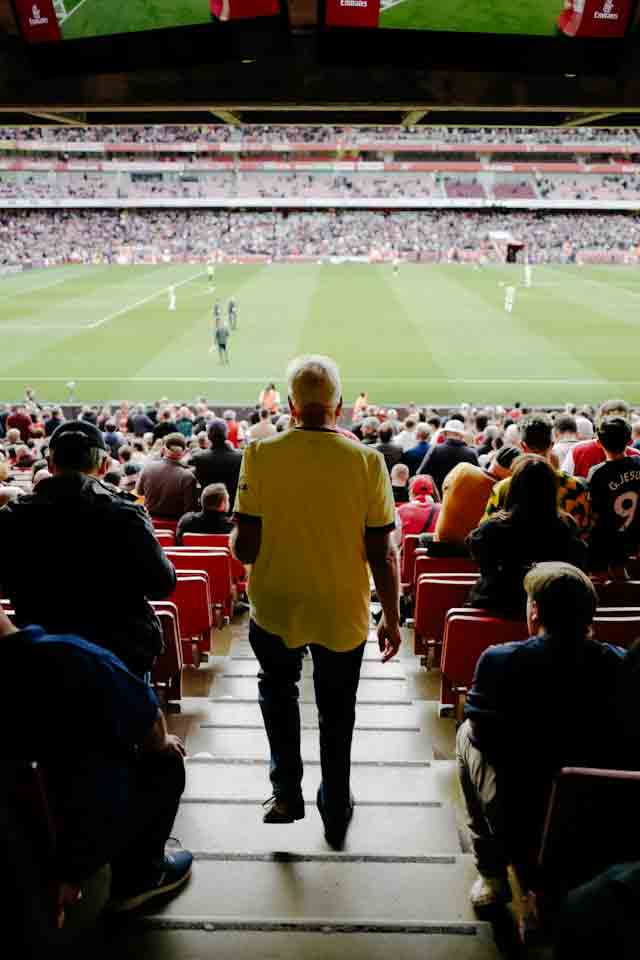
Real Madrid tickets & safe packages · Santiago Bernabéu, Madrid.
Madrid, Spain
Santiago Bernabéu
La Liga
Planning a trip to see Real Madrid this season is straightforward when you can compare what's available in one place. On this site you'll find options from around 15 different companies — ranging from sellers offering individual match tickets to operators putting together full travel packages with flights and hotel included. The idea is simple: you see what's out there, compare what suits you, and then complete the purchase directly on the seller's website. It's worth spending a few minutes looking at what each option actually includes, since the content of a package can vary quite a bit between providers — not just the price. Some companies focus purely on getting you a seat, while others build a weekend around the match. Payment methods, cancellation policies and what's covered in case of changes differ between sellers, so it's worth checking the details on the relevant company's page before booking. Whether you're going alone, with friends or as a group, there are options to suit most types of trips.
When comparing football trips to Real Madrid, the price is an obvious starting point — but it's not the only thing worth looking at. Two packages at similar prices can be quite different in terms of what's actually included: seat category, hotel location, whether transfers are covered, and so on. A football tour that includes a centrally located hotel a short walk from the metro will give you a very different experience to one where the accommodation is out of town. Some sellers also offer extras like stadium tours or pre-match hospitality, which may or may not be worth it depending on what you're after. The companies listed here cover a range of options, so it's possible to find something whether you're after a budget seat or a more complete package. The comparison on this site shows the key details side by side, and you can click through to the seller's page to get the full picture before deciding.
Getting Real Madrid tickets for a home match at Santiago Bernabéu isn't always simple. Buying directly through the club requires a membership, and even then, availability for popular fixtures is far from guaranteed. The sellers listed on this site offer match tickets without needing to go through that process — you pick the match, choose a seat category, and buy directly through the seller's page. Tickets for Real Madrid are available for most home fixtures across La Liga and the Champions League, though demand varies significantly depending on the opponent. Bigger matches — El Clásico, Champions League knockout rounds — tend to have higher prices and more limited availability. When browsing the options, check where in the stadium the seat is located, since the price difference between a lower tier and an upper tier can be significant. Some sellers also include a printed or digital ticket with clear instructions, which is useful if it's your first time at the ground.
As a visiting fan, the area around Santiago Bernabéu has a solid selection of bars and restaurants to spend time in before kick-off. Padre Damián street and the surrounding blocks near the stadium fill up with fans in the hours before a match. Bar Estadio and the various tapas bars along Paseo de la Castellana are popular spots. The atmosphere outside the ground is generally relaxed, though it gets busy close to kick-off. Arriving at least 90 minutes before the match is sensible — security queues can be long, especially for high-profile games, and the stadium is large enough that finding your section takes a few minutes. Bags are checked at the entrance, so keep things simple. Away fans are typically allocated a specific section, and it's worth confirming which gate to use when you receive your ticket. Food and drink inside the stadium is available but pricey, so eating beforehand is a reasonable option.
The metro is the easiest way to reach Santiago Bernabéu. Line 10 stops directly at Estadio Santiago Bernabéu station, which brings you out almost at the stadium entrance. Line 10 connects to several central stations including Alonso Martínez and Tribunal, making it accessible from most parts of the city. Alternatively, Line 9 stops at Gregorio Marañón, about a ten-minute walk away. Several bus lines also serve the area — lines 14, 27, 40 and 147 all stop nearby. From the city centre, the stadium is roughly 5–6 kilometres from Puerta del Sol, which is around 15–20 minutes by metro. Walking from the centre is possible but takes around an hour. Driving is an option, but parking near the stadium is limited on match days and the surrounding streets are heavily congested. Taxis and rideshare apps work well if you're coming from further out, though expect slower journeys as kick-off approaches.
Santiago Bernabéu is one of the most recognisable stadiums in European football, with a capacity of approximately 81,000. It opened in 1947 and has undergone several major renovations since, the most recent of which was completed in 2023 and included a retractable roof, a new exterior facade and significant upgrades to the interior. The roof can be closed for concerts and other events, and the stadium now operates year-round as a venue beyond just football. The stands are steep and close to the pitch, which means sightlines are good from most areas. The lower tier is generally the loudest section, with the Curva Sur — the south end — traditionally home to the most vocal Real Madrid supporters. The Bernabéu sits on Paseo de la Castellana, one of Madrid's main avenues, and is a landmark in the city even on non-match days. The stadium also houses a museum and a trophy room, which is worth visiting if you have time before the match.
Deciding between a package trip to Real Madrid or just buying a match ticket depends on how much of the trip you want to handle yourself. A standalone ticket makes sense if you're already based in Madrid or have accommodation sorted — you simply buy the seat and sort the rest independently. A travel package is a different proposition: the hotel, and sometimes flights, are bundled together with the ticket, which removes the need to coordinate everything separately. For first-time visitors to Madrid or those travelling from further away, a package can simplify the logistics considerably. It's also worth noting that the total cost of a package isn't always higher than booking each element separately, particularly for popular fixtures where hotel prices in Madrid tend to rise around match weekends. When comparing packages, look at the hotel's location relative to the stadium and city centre, and check what happens if the match is rescheduled — cancellation and rebooking terms vary between sellers.
Real Madrid's most significant rivalry is with Barcelona — El Clásico is arguably the most watched club fixture in the world and takes place twice a season in La Liga, with potential additional meetings in cup competitions. The history between the clubs runs deep and the matches carry weight well beyond the points at stake. Domestically, the rivalry with Atlético Madrid is intense and has grown significantly over the past decade, particularly after Atlético's league title wins and their Champions League final meetings with Real Madrid. The derby between the two Madrid clubs — sometimes called the Derbi Madrileño — is a major occasion in the city. At European level, matches against clubs like Manchester City, Bayern Munich and Liverpool have produced some memorable knockout ties in recent Champions League seasons, and those fixtures tend to generate significant demand for tickets and travel packages.
Real Madrid was founded in 1902 and has since become the most decorated club in European football, with over a dozen European Cup and Champions League titles. The club's history is built around iconic players across different eras. Alfredo Di Stéfano was central to the dominance of the late 1950s, when Madrid won five consecutive European Cups. Raúl, Fernando Hierro and Iker Casillas defined a later generation. More recently, Cristiano Ronaldo spent nine seasons at the club and became its all-time top scorer during that period. Luka Modrić, still at the club into his late thirties, has been one of the key figures in the four Champions League titles won between 2016 and 2022. Karim Benzema won the Ballon d'Or in 2022 during his time at Madrid. The current squad continues to attract world-class talent, and the Bernabéu remains a stage where individual quality and collective ambition regularly come together at the highest level.
A football trip to Madrid gives you access to a city with a lot going on beyond the stadium. The Prado Museum is one of Europe's great art collections and is worth a few hours if you have time. The Retiro Park is large enough to spend a morning in, particularly in good weather. For food, the La Latina neighbourhood has a high concentration of tapas bars and is a reliable area for eating well without spending a lot — Calle de la Cava Baja is a good street to walk along and pick somewhere. Mercado de San Miguel near Plaza Mayor is popular and worth a look, though it's busier and slightly more expensive. Malasaña and Chueca are lively neighbourhoods for bars and restaurants in the evening. The city generally eats late — dinner before 9pm is unusual — so the rhythm of a match day fits naturally into Madrid's schedule. Getting around by metro is easy and cheap, and most central sights are within a few stops of each other.