Malaga tickets & safe packages · Estadio La Rosaleda, Malaga.
Malaga, Spain
Estadio La Rosaleda
Segunda Division
Planning a trip to watch Malaga play at La Rosaleda is straightforward once you know where to look. On this site we compare options from a range of companies — some sell match tickets only, while others offer full travel packages with hotel and flights included. The idea is to give you a clear overview so you can decide what suits your trip best. Prices, inclusions and booking conditions vary between sellers, so it's worth looking at a few options side by side before deciding. Some companies specialise in weekend football trips, others focus purely on ticketing. What you're looking for depends on whether you already have accommodation sorted or need everything arranged. Either way, comparing here saves time rather than visiting each seller separately. More details about what's included in any given offer are available directly on the seller's page. The 2025/26 season brings its own fixtures and storylines, and there are already options available for upcoming home matches at La Rosaleda.
When you compare football trips to Malaga on this site, you're not just looking at price — the content of each offer matters just as much. A cheap ticket with no hotel option might work if you're already based nearby, but a full football tour with transport, accommodation and match access can be worth the extra cost if you're coming from further away. Some sellers bundle hotel nights around the match, others let you add flights. The companies listed here range from large travel operators to smaller ticket-focused services. Reading what's included carefully is important — a package might cover a three-star hotel close to the city centre, while another includes transfers from the airport. There's no single best option for everyone, which is exactly why comparing makes sense. Check the details on each seller's page before committing, since cancellation policies and payment methods differ between them.
Getting Malaga tickets through the club directly is possible, but it requires membership to apply, and even then a ticket isn't guaranteed. Buying tickets for Malaga through one of the partners listed on this site is a more reliable route — you know you have a confirmed place before you travel. Match tickets vary in category depending on which stand you're placed in, and some sellers offer options for different sections of La Rosaleda. Away fans are typically allocated a specific section, so if you're visiting as a neutral or a Malaga supporter, the options available to you may differ. It's worth checking what category of seat is included in any offer, since stand location affects both price and atmosphere. Additional information about what's included with a given ticket is listed on the seller's page. Booking in advance is sensible, particularly for matches against local rivals or when Malaga are pushing for promotion.
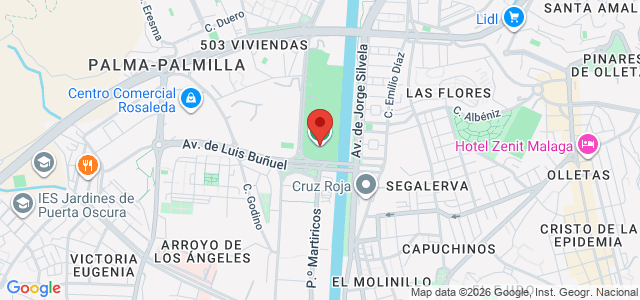
La Rosaleda sits in the northern part of the city, close to the Guadalmedina river. The area around the stadium has a handful of bars worth knowing about before the match. Bar Estadio and the bars along Calle Pacífico and nearby streets tend to fill up with home supporters on matchdays. The neighbourhood isn't a typical tourist area, which means the pre-match atmosphere is mostly local — which is part of the appeal. Arriving around 90 minutes before kick-off gives you time to get a feel for the surroundings without rushing. Visiting fans are usually directed to a specific entrance, so check your ticket for gate information before heading in. The stadium doesn't have enormous concourses, so getting to your seat a bit early is sensible. Security checks are standard — no large bags, no glass. Spanish football culture tends to be loud and expressive from the stands, even at second-tier level.
La Rosaleda is around 2 kilometres north of Malaga city centre, making it walkable from most central hotels in about 20–25 minutes. The route along Calle Héroe de Sostoa is direct and well-used by fans on matchdays. If you prefer public transport, several EMT bus lines serve the area — lines 1, 3 and 11 stop close to the stadium. The city's suburban train network (Cercanías) connects Malaga María Zambrano station to the city, and from there it's a manageable walk or short bus ride to the ground. Malaga also has a metro system with two lines; the closest stop is Estadio de La Rosaleda on Line 1, which puts you right by the ground. Driving is possible but parking around the stadium is limited on matchdays, and the surrounding streets get congested. Taxis and ride-hailing apps are a practical alternative if you're coming from further out or from the airport.
La Rosaleda has been Malaga's home ground since 1941, making it one of the older stadiums still in active use in Spanish football. The ground has a capacity of approximately 30,000 and sits in a compact urban setting that gives it a distinct character. It's been renovated several times over the decades, and the current structure features four covered stands arranged tightly around the pitch. The Fondo Norte end is traditionally where the most vocal home support gathers, and the atmosphere there during important matches can be intense. The stadium's location between the river and surrounding streets means there's little room for expansion, which keeps the feel relatively intimate for its size. La Rosaleda hosted matches during the 1982 FIFA World Cup, which remains a notable chapter in the ground's history. The pitch-side view from the lower tiers is close to the action, which most fans appreciate regardless of which stand they're in.
Deciding between a package trip to Malaga or a standalone ticket depends mainly on how much of the trip you've already sorted. If you need accommodation and want everything in one booking, a travel package makes the process simpler — you get the hotel, the ticket and sometimes flights or transfers bundled together. If you already have a place to stay or you're combining the match with a longer holiday in Andalusia, a ticket-only option is probably more practical. The companies listed here cover both approaches, so there's flexibility either way. A travel package also tends to come with clearer support if something goes wrong — a single point of contact rather than juggling multiple bookings. That said, booking components separately can sometimes give you more control over hotel choice and location. Look at what each seller includes and compare that against what you actually need for this trip before making a decision.
Malaga's most significant rivalry is with Granada, the other major club from Andalusia's eastern coast. Matches between the two carry a regional edge that goes beyond league position — it's a fixture both sets of supporters mark on the calendar early. The rivalry with Málaga and clubs from the broader Andalusian region also includes tension with Sevilla and Real Betis, though those matches are less frequent depending on which division each club is in. Locally, Atlético Malagueño represents the city's footballing roots at a lower level, but it's the regional derbies that tend to generate the strongest reactions from supporters. When Malaga and Granada meet, the atmosphere at La Rosaleda reflects years of competitive history between two cities that have never been particularly fond of each other on the pitch. These are the matches where the stadium feels noticeably different from a routine league game.
Malaga CF was founded in 1994, though the club traces its roots back to earlier local football through predecessor clubs. The most celebrated period in the club's history came in the early 2010s, following investment from Qatari ownership that allowed Malaga to compete seriously in La Liga and reach the UEFA Champions League quarter-finals in the 2012/13 season — a result that remains the club's highest-ever finish in European competition. That squad included quality players from across Europe and South America. Isco, the Spanish midfielder, came through Malaga's academy before moving to Real Madrid, and is probably the most notable product of the club's youth system. Ruud van Nistelrooy spent time at the club toward the end of his career. Argentinian striker Javier Saviola also played for Malaga. The club has since gone through significant financial difficulties and dropped down the divisions, but has been working its way back through the Spanish football pyramid in recent seasons.
A football trip to Malaga works well as a longer city break — there's enough to fill a few days comfortably without rushing. The historic centre is compact and walkable, with the Alcazaba (a Moorish fortress) and the adjacent Roman theatre being the most obvious starting points. The Picasso Museum is located in the old town and draws visitors year-round — Malaga was Picasso's birthplace. The Cathedral, known locally as La Manquita ("the one-armed lady") due to one unfinished tower, is worth a look from the outside at minimum. The port area has been redeveloped significantly and has a good stretch of restaurants and bars. For food, the central market (Mercado Central de Atarazanas) is a solid option for lunch. The beaches are within walking distance of the centre and are usable for much of the year given the climate. El Palo and Pedregalejo, slightly east of the centre, are quieter neighbourhoods with traditional chiringuitos serving fresh fish.