Monaco tickets & safe packages · Stade Louis II, Monaco.
Monaco, France
Stade Louis II
Ligue 1
Monaco is one of those destinations that works on multiple levels — it's a football trip and a city break rolled into one. The principality is compact, easy to navigate and has enough going on outside matchdays to justify a longer stay. On this site you can compare football trips from a range of companies, from straightforward match ticket sellers to operators offering full travel packages with hotel and flights included. The companies listed here vary in what they offer, so it's worth looking at the content of each option rather than just the headline price — some include transfers or guided experiences, others are purely logistics. With Monaco competing in Ligue 1 and potentially in European competition depending on how the season develops, there are usually several home fixtures worth considering across the season. Use the comparison tool to get a clear overview of what's available and what each option actually includes before making a decision.
When comparing football trips to Monaco, the price is one factor but not the only one. A football tour that includes accommodation near the stadium or in central Monaco will save you time and stress, especially given how small the principality is and how quickly things can get busy on matchdays. The companies listed on this site offer different combinations — some focus purely on tickets, others bundle in hotels, and a few include flights as well. It's worth checking whether the hotel is actually in Monaco or across the border in France, since that affects both cost and convenience. Comparing isn't just about finding the cheapest deal; it's about finding the right fit for how you want to travel. Some travellers want everything sorted in advance, others prefer to book accommodation separately and just secure the ticket. Both approaches are catered for among the options listed here.
Getting Monaco tickets can be straightforward if you plan ahead. The club does sell directly, but purchasing through the club's own system typically requires membership, and even then a ticket isn't always guaranteed. Buying match tickets through one of the partners listed on this site is a more reliable route — the booking process is clear and you know you have a confirmed seat before you travel. Tickets for Monaco matches vary in price depending on the opponent and the competition, with European nights and top-of-the-table Ligue 1 clashes naturally attracting more demand. The Stade Louis II isn't a huge ground, so capacity is limited and popular fixtures can be harder to secure. If there's a specific match you want to attend, it's worth acting early. The listings on this site show what's currently available from each seller, including what category of seat is included and what extras, if any, come with the match ticket.
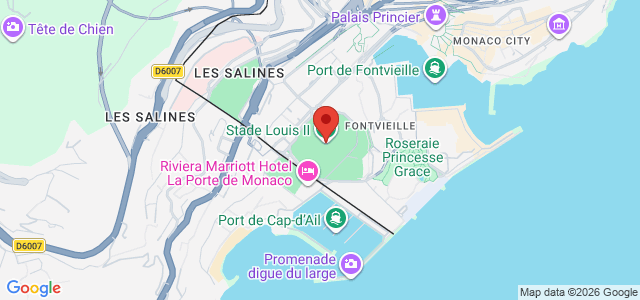
Stade Louis II sits in the Fontvieille district, which is one of the quieter, more industrial parts of Monaco — reclaimed land, essentially. There aren't many traditional football pubs immediately outside the ground, but the principality is small enough that you're never far from somewhere to eat and drink. The area around the port and Monte-Carlo has plenty of bars and brasseries. Le Tip Top on Rue de la Terrace is a long-standing local bar with a relaxed atmosphere, and the Brasserie de Monaco near the port serves local beer brewed on-site. For visiting fans, arriving around 90 minutes before kick-off is sensible — the stadium doesn't have a huge surrounding area, so getting in early is more comfortable than waiting in a queue. Monaco's fanbase is relatively mixed in terms of nationality, which makes the ground feel accessible to visiting supporters. Dress code at the stadium is casual, but smart casual is the norm in Monaco more broadly.
Stade Louis II is located in the Fontvieille district in the western part of Monaco. The easiest way to reach it without a car is by bus — Monaco's urban bus network is reliable and cheap. Bus line 6 connects the central Monte-Carlo area with Fontvieille and stops close to the stadium. Line 5 also serves the area. The journey from central Monaco takes around 10–15 minutes depending on where you board. If you're staying near the Casino or the train station, both lines are accessible on foot. Monaco's train station, Monaco-Monte-Carlo, is served by regional trains from Nice and the French Riviera — the journey from Nice takes around 20 minutes. From the station it's a short bus ride or around a 25-minute walk to the ground. Parking in Monaco is expensive and limited, so driving is not the practical choice for matchdays. Walking from the port area through Fontvieille is manageable and takes roughly 20 minutes.
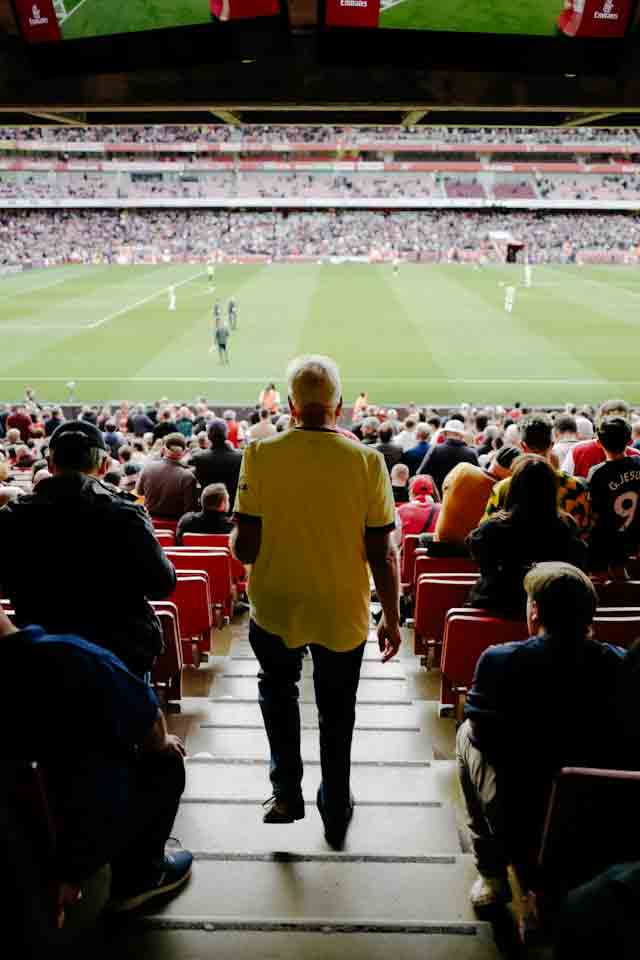
Stade Louis II opened in 1985 and was built largely underground into the rock of the principality, with the playing surface sitting below street level. It replaced an earlier version of the stadium from the 1930s. The ground holds approximately 18,500 spectators and is named after Prince Louis II of Monaco. Given the scale of the club relative to its surroundings, the stadium is a reasonable size — Monaco is one of the smallest sovereign states in the world, so a ground of this size is notable. The pitch is known for being well-maintained, and the covered stands create decent acoustics. The Ultras Monaco, the main supporter group, occupy the Virage Sud and are the most vocal section of the ground. European nights at Stade Louis II tend to generate a noticeably different atmosphere compared to routine league fixtures. The stadium also hosts the annual Prince's Cup final and has been used for other sporting events beyond club football.
Whether a package trip to Monaco or a standalone ticket makes more sense depends on how much you want to organise yourself. A travel package that combines flights, hotel and match ticket is convenient and means everything is confirmed before you leave — useful if you're travelling from further away or going as a group. On the other hand, if you're already based in southern France or planning a broader trip to the Riviera, booking just the match ticket and sorting accommodation separately might be more flexible. The companies listed here offer both options, so it's worth comparing what's included in each travel package before committing. Some packages are built around specific fixtures, particularly European matches, while others give you more flexibility on timing. Check whether hotel location is specified — being in Monaco itself versus staying in Nice or Menton makes a practical difference, both for the matchday experience and for getting around.
Monaco's main rivalry in French football is with Nice, the club from the nearest major city across the border. The fixture is sometimes referred to as the Côte d'Azur derby and carries genuine regional significance, even if the two clubs haven't always been competing at the same level. Marseille is another club that Monaco fans have a strong competitive relationship with — both have historically been among the leading clubs in Ligue 1, and matches between them tend to be tightly contested. There's also a broader rivalry with Paris Saint-Germain, which has intensified since PSG's transformation into a financial powerhouse. Monaco's title wins have often come at the expense of PSG, making that fixture particularly charged. The dynamic between Monaco and the Paris club reflects wider tensions in French football about resources, investment and the balance of power in Ligue 1.
AS Monaco was founded in 1924 and has spent the majority of its history in the top tier of French football. The club has won Ligue 1 on multiple occasions, with notable title-winning sides in the 1980s and 1990s under coaches including Arsène Wenger, who managed the club in the late 1980s. Monaco also reached the UEFA Champions League final in 2004, losing to Porto. The club has produced and attracted considerable talent over the decades. Thierry Henry came through the Monaco academy and made his professional debut there before moving to Juventus and then Arsenal. Kylian Mbappé similarly developed at Monaco and burst onto the wider European scene during the 2016/17 Champions League campaign before joining PSG. More recently, the club has maintained a model of developing young players and competing at a high level despite the financial constraints of operating from a small territory. That approach has kept Monaco relevant in both domestic and European competition.
A football trip to Monaco gives you access to one of the more unusual places in Europe. The principality is tiny — you can walk across it in under an hour — but it packs in a lot. The Casino de Monte-Carlo is the obvious landmark and worth seeing even if you don't gamble, just for the architecture and the surrounding square. The Oceanographic Museum, perched on the cliff above the sea, is genuinely worth a visit — it was directed by Jacques Cousteau for decades and the aquarium is one of the better ones in Europe. The old town, Monaco-Ville, sits on the rock above the port and has the Prince's Palace, the cathedral and narrow streets that are quieter than the rest of the principality. The port area is good for eating and drinking without the Monte-Carlo prices. If you have time, the surrounding French Riviera is easily accessible by train — Nice, Èze and Menton are all within 30 minutes.